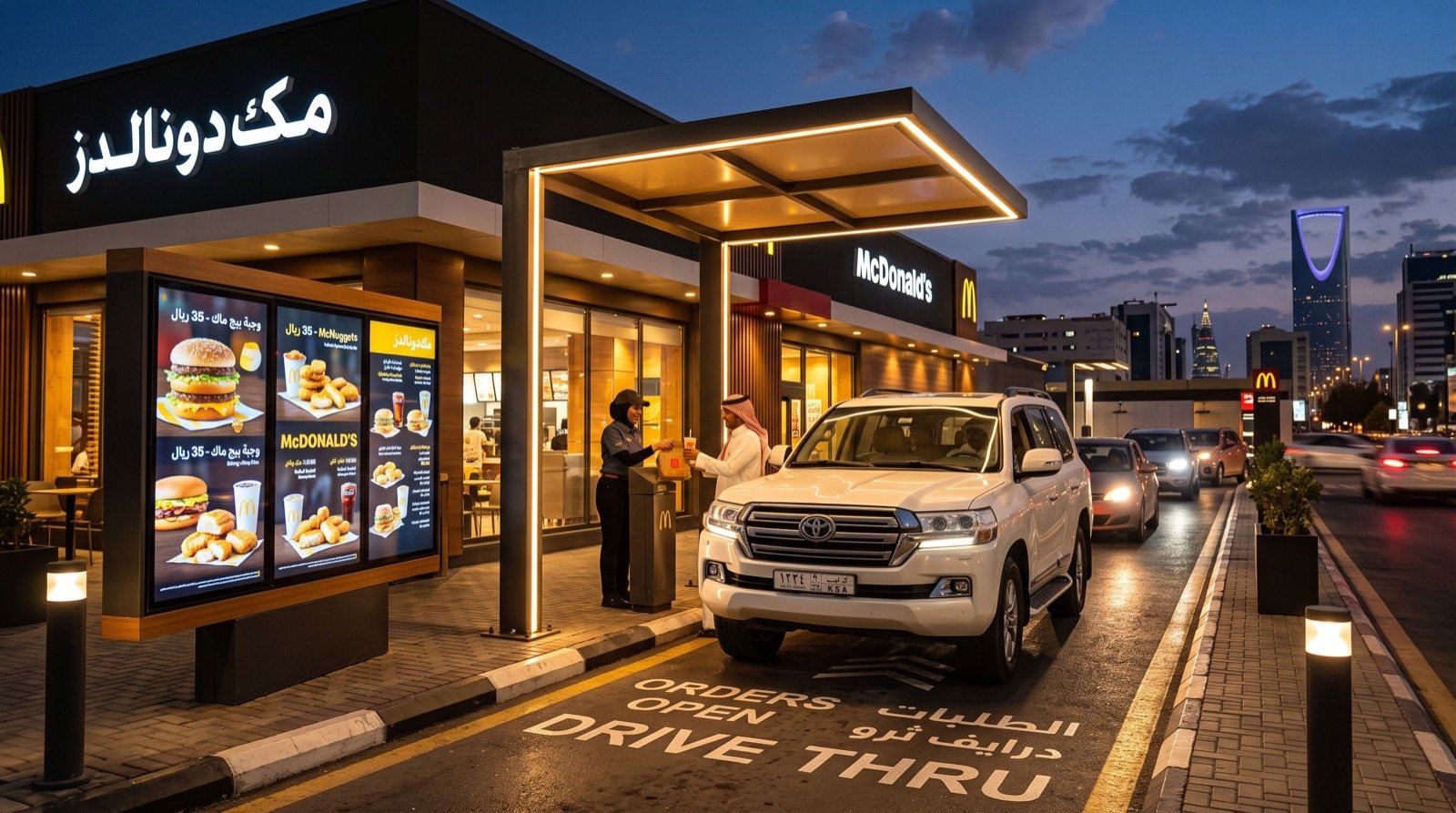
5 Myths About Drive Thru Systems in Saudi Arabia (2026)
Franchise owners evaluating new drive thru systems in Saudi Arabia often hesitate because of outdated assumptions passed around at industry meetups and old vendor pitches. Some of these ideas were true five years ago. Most of them aren’t anymore. This article walks through the five most persistent myths we hear in 2026 and replaces each one with what’s actually happening on the ground across Saudi retail and quick-service deployments.
Getting this wrong is expensive. Franchise owners who delay a hardware upgrade based on bad information often watch a competing location down the street pull ahead on speed-of-service scores, which directly affects brand-standard compliance reviews and, eventually, lease renewal conversations with landlords who track tenant performance.
Myth 1: Drive Thru Systems Are Too Expensive for Small Franchises
This was closer to true a decade ago when headset systems required proprietary, high-cost hardware. Today, modern Drive Thru Systems are modular, which means a single-lane franchise location can install a scaled-down version for a fraction of what a flagship store pays, then add features as volume grows. Financing and leasing options from regional vendors have also made the upfront cost far less of a barrier than owners assume.
Myth 2: Barcode Scanners Are Only Useful for Big-Box Retailers
Small franchise locations assume handheld scanning is overkill for their inventory size. In practice, even a single-location cafe benefits from accurate stock counts, and devices like the Honeywell Voyager XP 1470g are priced and sized for exactly this kind of smaller operation. The manufacturer’s own product documentation, available through Honeywell’s industrial scanning division, specifically markets this model toward mid-size retail and food service, not just warehouse logistics.
Barcode standardization itself is also more accessible than owners think; the global standards body GS1 maintains open specifications that most point-of-sale systems already support out of the box.
It’s worth pointing out why this myth persists so stubbornly: a lot of owners are still comparing current pricing against quotes they received five or more years ago, before modular hardware and regional financing options became common. Vendors serving the Saudi market in 2026 compete directly on flexible leasing terms specifically because they know small operators were priced out in the past, and that competitive pressure has pushed entry costs down meaningfully.
Myth vs. Reality Quick Reference
Here’s a condensed comparison of the assumptions we hear most often against what’s actually true in 2026.
| Myth | Reality in 2026 |
|---|---|
| Drive thru systems need a full kitchen rebuild | Most installs retrofit existing counters in 3–5 days |
| Barcode scanners are for warehouses only | Handheld scanners now standard in cafes and small retail |
| Staff can’t learn new systems quickly | Typical competency reached within one to two weeks |
| Upgrades always cause downtime | Phased installs can run alongside normal operations |
A related point owners miss: barcode scanning data also feeds directly into loss-prevention reporting, something small operators rarely budget for separately but get almost for free once scanning becomes part of the daily receiving routine. A cafe that scans every delivery against its purchase order catches short shipments and pricing errors within days instead of discovering them weeks later during a frustrating manual stock count.
Myth 3: Upgrading Means Shutting Down for Days
Owners picture a full closure, lost revenue, and an angry landlord. In reality, most vendors now run phased installations that keep one lane or counter operational while the other gets upgraded. A typical single-lane retrofit takes three to five days, and multi-lane locations can stagger the work so the business never fully closes.
Scheduling the install during a franchise’s historically slower weekday afternoons, rather than attempting a weekend rush install, is a simple scheduling tip that consistently reduces both customer complaints and staff stress during the transition.
Myth 4: New Systems Are Too Complicated for Existing Staff
This myth usually comes from owners who tried a poorly supported system years ago. Modern interfaces are built around the same order-taking logic staff already know, just digitized. The learning curve is real but short:
- Day one to two: basic headset and screen familiarity.
- Day three to five: comfortable handling normal volume without supervision.
- Week two: full confidence during peak-hour rushes.
- Month one: staff start suggesting their own workflow shortcuts.
That last point matters — franchise owners consistently report that their best process improvements after an upgrade came from frontline staff feedback, not from the vendor’s manual.
Myth 5: Only Large Chains Benefit From the Data
Independent franchise owners assume order-timing analytics are a large-chain luxury. In reality, a single location gains just as much from knowing its actual average order time, peak-hour bottlenecks, and staff-level performance. Follow this sequence to get value from the data immediately:
- Pull the first 30 days of order-timing reports once the system is live.
- Identify your slowest 20% of transactions and look for a common cause.
- Adjust staffing or menu-board wording to address that specific bottleneck.
- Re-check the data 30 days later to confirm the fix actually worked.
Getting the Full Picture Before You Decide
Myths about retail technology tend to spread fastest among owners who haven’t yet talked to anyone who’s actually completed an upgrade. Before dismissing drive thru systems as too costly or disruptive, it’s worth getting a second, independent opinion. Many franchise owners in the Kingdom turn to trusted professionals when vetting vendor claims across any major operational upgrade, not just marketing decisions, because an outside perspective tends to catch oversold promises before a contract gets signed.
Frequently Asked Questions
Are drive thru systems worth it for a single-location franchise?
Yes, in most cases. Modular pricing has made entry-level setups accessible to single locations, and the speed-of-service gains often improve brand-standard compliance scores that affect franchise renewal terms.
How long until a barcode scanner pays for itself?
Most small operators see the hardware cost offset within three to six months through reduced stock-count errors and faster receiving, though this varies with inventory volume.
Do these upgrades require closing the store?
No. Phased installation is now standard practice, letting at least part of the operation continue serving customers during the switch-over.
Can frontline staff really learn the system quickly?
Most reach comfortable, unsupervised proficiency within one to two weeks, based on patterns reported across recent Saudi franchise rollouts.
The myths around drive thru systems in Saudi Arabia mostly trace back to outdated information, not current reality. Talk to a location that’s already upgraded, look at real 2026 install timelines, and make the decision based on current facts rather than old industry assumptions.